Dioscuri Symposium
Frontiers in Biophysics and Advanced Microscopy
Friday, February 13, 9am – 1pm
A. Kochanovská Hall, Institute of Physics of the CAS
PROGRAMME
8:30 Open door
9:00 Opening remarks | Dr. Michael Prouza | Director of FZU of the CAS
9:30 Pushing the Limits of Cryo-EM: What’s Left to Improve? | Prof. Holger Stark | Director of MPI-MDS, Göttingen
10:15 Optical imaging nanotools to interrogate the plasma membrane of living cells | Prof. Maria Garcia-Parajo | ICREA, Barcelona
11:00 Coffee Break
11:30 Nano-optical Approaches for and with Molecular Motors | Prof. Stefan Diez | TU Dresden
12:15 Label-free IR Nanoscopy and Tomography of Intracellular Structures | Prof. Joachim Heberle | FU Berlin
13:00 Closing remarks | Dr. Barbora Špačková | DC leader at FZU of the CAS

register here:
Dr. Holger Stark
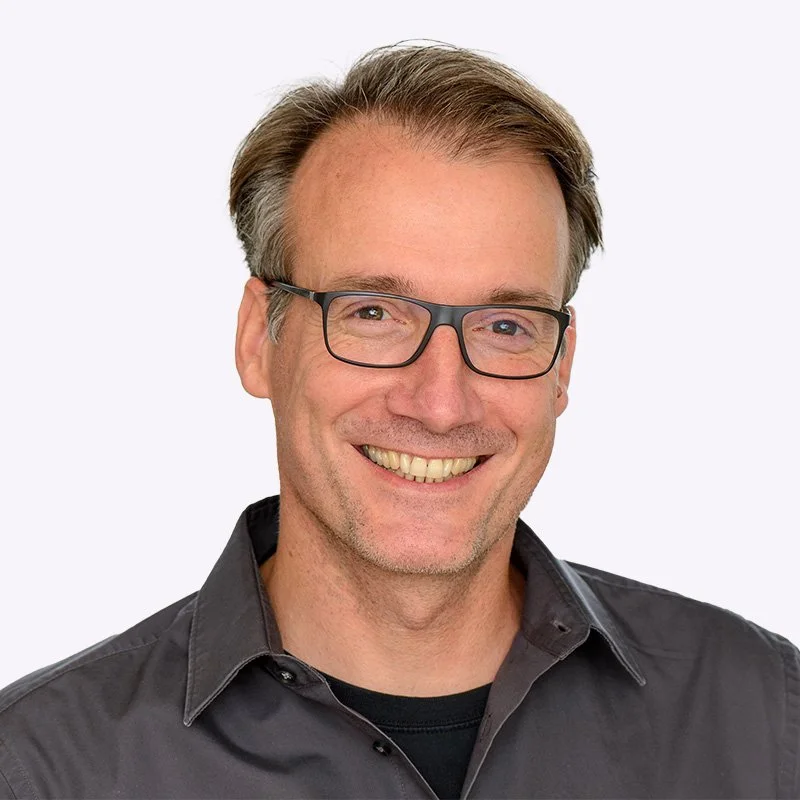


Director of Max-Planck Institute for Multidisciplinary Sciences and Professor at University of Göttingen. His research investigates structure and function of macromolecule complexes using cryoEM technique. His work mainly focuses on pre-mRNA splicing.
Holger Stark received his PhD in Biochemistry at Freie Universität (FU) Berlin in 1996. After his postdoc at Imperial College London, UK he became a group leader at University of Marburg (1998–1999) and the Max Planck Institute for Biophysical Chemistry in Göttingen (2000–2007). In 2007, he became Professor for Molecular Electron Cryomicroscopy at University of Göttingen and directed the Department of Structural Dynamics at the MPI for Biophysical Chemistry. Since 2015, he has served as a Director at the MPI for Multidisciplinary Sciences (former MPI for Biophysical Chemistry), and honorary professor at the University of Göttingen. Since 2025, he has been a member of the Scientific Advisory Board of the Dioscuri Centre for Single-Molecule Optics. His research focuses on high-resolution three-dimensional imaging of large macromolecular complexes using single-particle cryoEM to elucidate the mechanisms of pre-mRNA splicing and translation. Throughout his career, he has received numerous accolades, including the Otto-Hahn-Medal from the Max Planck Society (1997), the Ernst-Ruska Prize (2013), and election to the German Academy of Sciences Leopoldina (2018).
Dr. Maria Garcia-Parajo
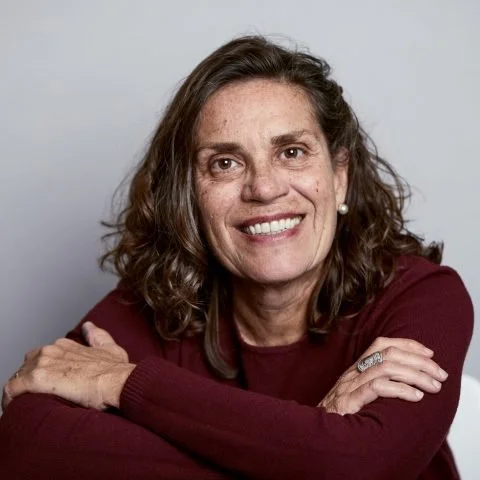

Professor at Catalan Institution for Research and Advanced Studies and Head of Single Molecule Biophotonics at Institute of Photonic Sciences in Barcelona. Her research develops advanced optical and super-resolution microscopy and nanophotonic approaches to study the nanoscale spatiotemporal organization and dynamics of biomolecules in living cells.
Maria Garcia-Parajo received her PhD in Physical Electronics in 1993 at Imperial College, London, UK. After postdocs at the Laboratory of Microstructures and Microelectronics at National Centre for Scientific Research, Bagneux, FR and University of Twente, NL, she became permanent staff member at University of Twente in 1998. In 2005 she moved to Barcelona as Research Professor at Catalan Institution for Research and Advanced Studies, first hosted at the Institute for Bioengineering of Catalonia and since July 2011 at Institute of Photonic Sciences, leading the Single Molecule Biophotonics group. She coordinates several international research projects and has been a member of the executive board of the Spanish Biophysical Society and the International Fluorescence Society. She has received several prestigious awards, including the Advanced grant of the HFSP (2012), Bruker National Prize in Biophysics (2017), Advanced ERC grant 2017 and Emmy Noether Laurate, European Physical Society (2020). Since 2025, she has been a member of the Scientific Advisory Board of the Dioscuri Centre for Single-Molecule Optics. Maria is actively involved in national and international actions to promote gender equity in Science.
Dr. Stefan Diez
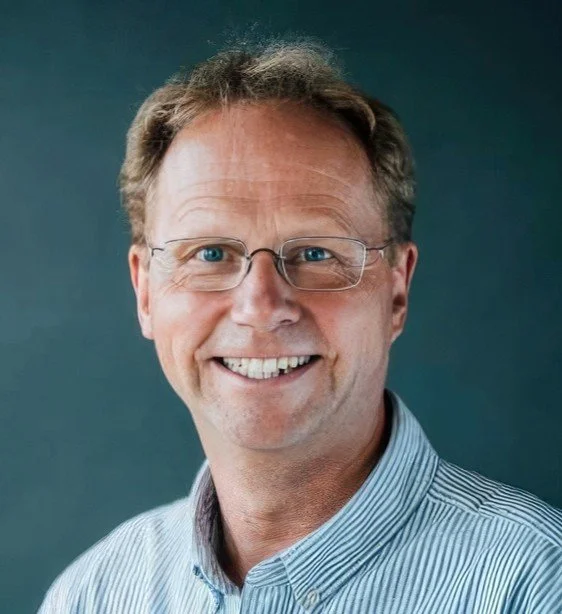

Professor at Technical University Dresden. His research group develops novel optical techniques to study molecular transport and cytoskeletal dynamics and applies molecular motors in engineered environments for nanotechnological applications.
Stefan Diez received his PhD in Physics in 2000 from the Technical University Berlin, where he worked on optical telecommunications. In 2000, he joined the Max Planck Institute of Molecular Cell Biology and Genetics in Dresden, first leading Optical Technology Development and subsequently, in 2004, establishing his own research group studying molecular motors and cytoskeletal dynamics. In 2010, he was appointed Professor for BioNanoTools at Center for Molecular Bioengineering (B CUBE) at TU Dresden. He served as a Director of B CUBE from 2012 to 2015 and has served again since 2024. From 2018 to 2021 he was Managing Director of Center for Molecular and Cellular Bioengineering at TU Dresden, and he co-served as speaker of the Cluster of Excellence Physics of Life from 2019 to 2022. Since 2012, he has been Vice-Dean of Dresden International Graduate School for Biomedicine and Bioengineering. He has received several prestigious awards, including the Philip Morris Foundation Science Award (1999), the James Heineman Research Award (2008), an ERC Starting Grant NanoTrans (2009–2014), and a DFG Heisenberg Professorship (2010–2015). He became a Max Planck Fellow at MPI-CBG Dresden in 2019 and a Fellow of the Max Planck School Matter to Life in 2021. In 2024, he was elected EMBO Fellow. Since 2024, he has been a Partner of Dioscuri Centre for Single-Molecule Optics and, in this role, also a member of its Scientific Advisory Board.
Dr. Joachim Heberle
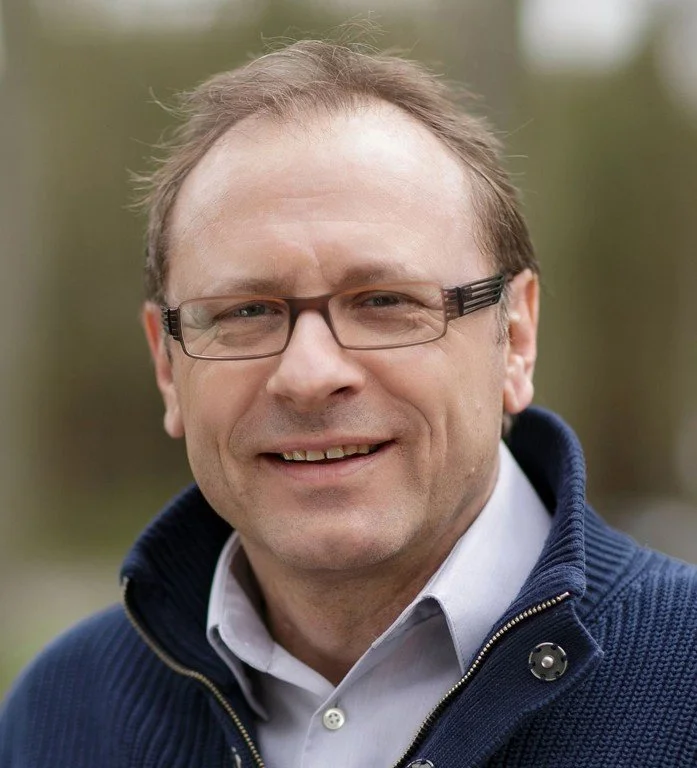

Professor at Freie Universität Berlin and Head of Experimental Molecular Biophysics. His research interests are in the structure and function of membrane proteins and development of spectroscopic methods to elucidate the intricate mechanism of membrane proteins on the atomistic level.
Joachim Heberle received his PhD in Biophysics at Freie Universität Berlin in 1991. After postdoc at the Hahn-Meitner Institute in Berlin and several international research stays in USA and Sweden, he became a group leader at Research Center Jülich in 1993. In 1998 he completed his habilitation in Biophysical Chemistry and in 2005 became a full professor of Biophysical Chemistry at Bielefeld University. Since 2009 he has held the position of Professor of Experimental Molecular Biophysics at FU Berlin, where he leads international research group focusing on function of membrane proteins and methodologies to investigate these. Over the course of his career, he has held numerous scientific leadership and service roles. He served as chairman of research center SFB 1078 Protonation dynamics in protein function from 2017 until its completion in 2024, coordinating a large interdisciplinary research network. He has been an Associate Editor of Chemical Reviews since 2015, a member of the executive board of the Cluster of Excellence UniSysCat since 2019. He serves in scientific and ethics committees including the Central Ethics Committee at FU Berlin. Joachim is a partner of Dioscuri Centre for Structural Dynamics of Receptors and, in this role, serves as a member of its Scientific Advisory Board. In addition, since 2025 he has been a member of the Scientific Advisory Board of the Dioscuri Centre for Single-Molecule Optics.